We are partnering with a growing wave of business owners demonstrating that Employee Ownership leads to stronger businesses and better returns. Employee Ownership has been proven to unlock talent and productivity, build wealth, and improve individual and community outcomes.
In short, Employee Ownership is good business
THE EMPLOYEE OWNERSHIP SCENARIO
We often encounter two distinct scenarios among business owners considering employee ownership. The first involves owners and their partners who are in the early stages of exploring employee ownership as a potential cornerstone of their growth strategy and long-term succession plan. These owners are seeking guidance on whether employee ownership aligns with their vision and how to begin navigating the transition.
The second scenario involves owners who are further along in their journey, actively comparing employee ownership to alternative options, such as offers from potential buyers already at the table. These owners are weighing the financial, cultural, and legacy implications of employee ownership against more traditional exit strategies and need a clear understanding of how it measures up to their goals.
As they embark on this journey, they face the challenge of navigating a complex array of employee ownership models. From traditional ESOPs (Employee Stock Ownership Plans) and worker cooperatives to innovative Employee Ownership Trusts (EOTs), phantom stock, and hybrid approaches, the options are vast and nuanced.
Without clear guidance, it can be difficult for owners to identify the best fit for their business, employees, and long-term goals.
Finding the right employee ownership solution presents a paradox: it’s both surprisingly easy and frustratingly difficult. It’s easy because a host of advisors, consultants, and organizations are eager to guide business owners toward specific models, each offering their unique expertise in executing ESOPs, cooperatives, EOTs, or other structures.
However, the abundance of options can also make it hard, as few of these partners are agnostic to the outcome. Our goal is to is to play the role of the unbiased advisor—someone solely focused on understanding the unique needs of the business and its stakeholders and providing guidance to maximize the gains to owners and employees.
Ever quarter new innovations are being developed for deployment of employee ownership models. Why?
Employee ownership is a force multiplier for investor returns, capital efficiency, economic mobility, and overall benefits to society.
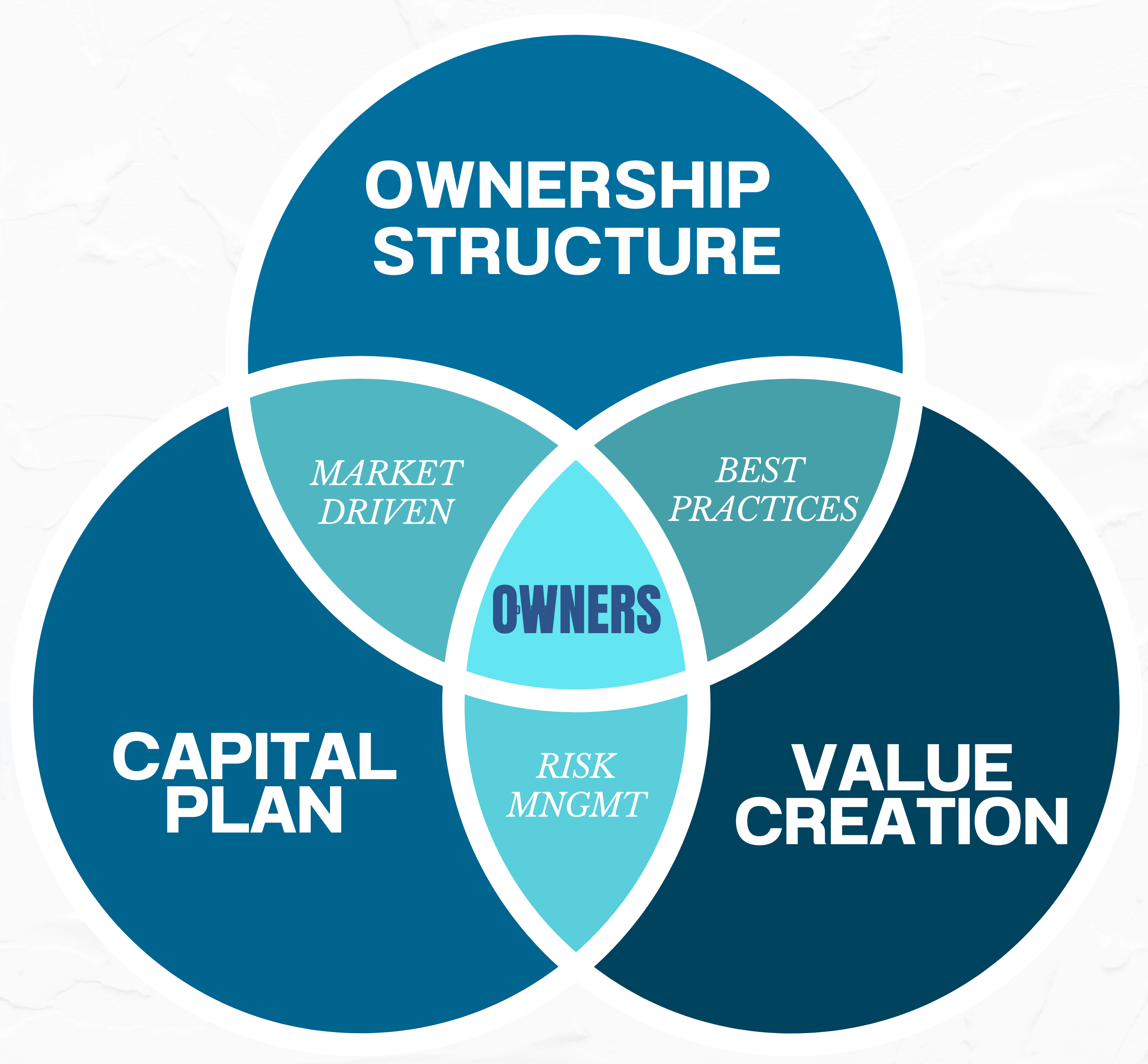
The lower, middle market offers significant opportunity to create replicable EO models to the benefit of owners, investors, employees, and all stakeholders
THE EMPLOYEE OWNERSHIP OPPORTUNITY
Navigating this opportunity demands careful planning to ensure the chosen approach aligns with the company’s vision and maximizes its benefits. Each model comes with its own set of legal, financial, and operational considerations—ranging from tax implications to governance structures and funding strategies. For business owners, the key lies in identifying a path that aligns with their company’s vision while maximizing the benefits for employees and stakeholders. Successfully charting this course requires expertise, strategic planning, and a clear understanding of how each model can support the company’s goals.
Establish the Employee Ownership Framework
Conduct a Feasibility Assessment: Evaluate the business’s readiness for employee ownership by analyzing financial health, organizational culture, and long-term goals.
Choose the Right Ownership Model: Select an appropriate structure such as an ESOP, worker cooperative, private equity with broad-based ownership, or Employee Ownership Trust (EOT) based on the company’s unique needs and values.
Develop Strategic Implementation Plan: Create a plan that outlines the steps, timeline, and resources needed to implement the chosen ownership structure successfully.
Execute the Ownership Transition
Assemble a Transition Team: Work with advisors, legal counsel, and financial experts to structure and implement the transaction effectively.
Secure Financing: Identify and secure funding sources for the employee ownership transaction, including seller financing, external loans, or internal contributions.
Close the Deal: Finalize the transaction, ensuring all legal, financial, and operational processes are completed smoothly. Communicate the transition clearly to employees and stakeholders to ensure a shared understanding of the new structure and its benefits.
Scale for Sustainable Growth
Optimize Operations: Leverage the benefits of employee ownership, such as increased productivity and engagement, to fuel growth and innovation.
Integrate KPIs: Establish measurable metrics to track progress on objectives, creating accountability and transparency.
Empower Employee Owners: Provide training and leadership development to enable employees to take an active role in decision-making and drive the company’s mission forward.


 40 MILLION OWNERS